











How the BRRRR Method Makes Millionaires
Real estate investors love acronyms, but most are just marketing wrapped around conventional wisdom. BRRRR is different. It’s not a gimmick—it’s a systematic approach to building wealth through real estate that leverages other people’s money, forces appreciation, and allows you to scale without running out of capital.
BRRRR stands for Buy, Rehab, Rent, Refinance, Repeat. The strategy is simple in concept but requires execution discipline, market knowledge, and financial sophistication to work consistently. Done right, it’s how investors go from owning one property to building portfolios of 10, 20, or 50+ units without needing massive amounts of personal capital.
Done wrong, it’s how investors overleverage themselves, get stuck with money pit properties, and learn expensive lessons about cash flow math.
Let’s break down how this actually works, where the wealth creation happens, and what separates successful BRRRR investors from the ones who flame out.
The Mechanics of BRRRR
The traditional path to real estate investing is straightforward: save up a down payment (20-25% of purchase price), buy a rental property, hold it, and hope it appreciates while collecting rent. Your wealth grows slowly as you pay down the mortgage and the property (hopefully) appreciates. To buy another property, you save up another down payment. Rinse and repeat.
This works, but it’s capital-intensive and slow. If you need $50,000 for a down payment and can save $15,000 per year, you’re buying one property every three years. At that pace, building a meaningful portfolio takes decades.
BRRRR accelerates this by recycling your capital. Here’s how:
Buy: You purchase a distressed or undervalued property, usually with cash or short-term financing. You’re looking for properties that need work—outdated kitchens, cosmetic damage, deferred maintenance—but have good bones in decent locations. The key is buying below market value because of the property’s condition, not because the neighborhood is terrible.
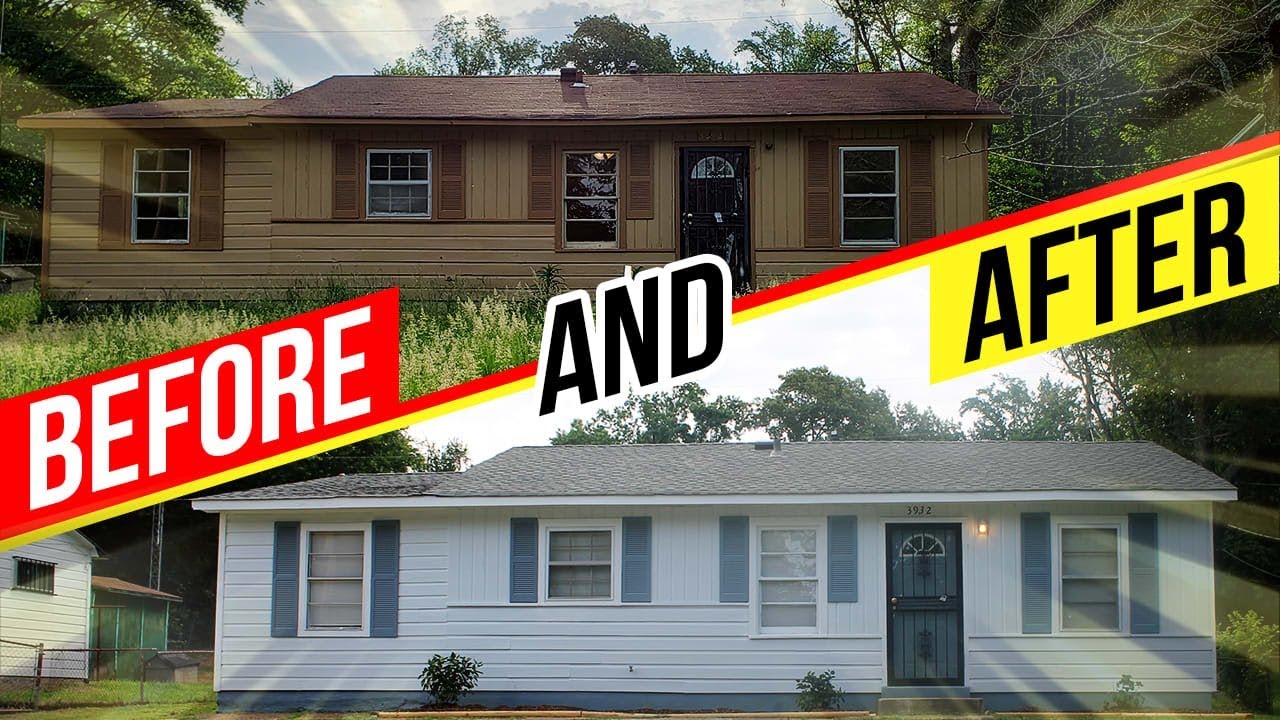
Rehab: You renovate the property to bring it up to market standards. This isn’t about luxury finishes—it’s about making the property clean, functional, and rentable at market rates. New flooring, updated kitchen and bath, fresh paint, functional systems. You’re forcing appreciation by improving the property’s condition and rental income potential.
Rent: You place a tenant and stabilize the property as a performing rental. You’re collecting market-rate rent, demonstrating cash flow, and establishing the property as an income-producing asset rather than a fixer-upper.
Refinance: Once the property is renovated and rented, you refinance with a long-term mortgage based on the new, higher appraised value. Banks will typically lend 70-80% of the improved value. If you bought right and renovated efficiently, this refinance pulls out most or all of your initial investment.
Repeat: You take the capital from the refinance and use it to buy the next property. Your money is recycled. The first property stays in your portfolio generating cash flow and appreciation, but your capital is freed up to scale.
Where the Wealth Actually Gets Created
BRRRR creates wealth through three distinct mechanisms, and understanding each is critical to making the strategy work.
Forced appreciation through renovation. Unlike buying and holding, where you’re hoping market appreciation lifts your property value, BRRRR creates equity immediately. You buy a property for $150,000 that needs $30,000 in work. After renovation, it appraises for $220,000. You’ve created $40,000 in equity through intelligent capital deployment, not by waiting for the market.
This equity is real. It shows up in the appraisal. It becomes the basis for your refinance. And it happens in months, not years.
Leverage amplification. When you refinance at 75% loan-to-value on a $220,000 property, you’re pulling out $165,000. Your all-in cost was $180,000 ($150K purchase + $30K rehab). You’ve recovered $165,000 of your $180,000, leaving only $15,000 of your own money in the deal.
You now own a $220,000 asset that generates cash flow, with only $15,000 of your capital at risk. That’s leverage. Your return on investment isn’t calculated on the property value—it’s calculated on your actual money in the deal. If the property cash flows $300/month, that’s $3,600 annually on $15,000 invested, a 24% cash-on-cash return.
Scalability through capital recycling. This is where millionaires are made. Traditional investors put $50,000 into a property and it stays there. BRRRR investors put $50,000 into a property, pull out $40,000-$45,000 through the refinance, and redeploy it into the next deal.
With the same $50,000, a BRRRR investor can potentially acquire 3-5 properties in the time it takes a traditional investor to buy one. Each property generates cash flow and appreciates. Each property pays down its own mortgage through tenant rent payments. The wealth compounds across multiple assets simultaneously.
The Math That Makes or Breaks BRRRR
BRRRR sounds great in theory. In practice, the math has to work at every step, or you end up trapped.
The 70% rule on acquisition. Experienced BRRRR investors use the 70% rule: purchase price plus rehab costs should be no more than 70-75% of the after-repair value (ARV). This ensures you can refinance and pull most of your capital back out.
Example: If the ARV is $200,000, your all-in cost (purchase + rehab) should be $140,000-$150,000. If you pay $160,000, you’re leaving too much capital in the deal and breaking the recycling mechanism.
Cash flow after refinance. The refinance creates a higher loan balance than if you’d bought the property traditionally with 20% down. That means a higher mortgage payment. Your property needs to generate enough rent to cover the mortgage, taxes, insurance, maintenance, vacancies, and still cash flow positively.
If market rents don’t support the numbers after refinance, you’ve bought wrong. You’ll own a property that bleeds cash every month, which destroys your ability to scale.
Rehab cost control. The most common mistake is underestimating rehab costs. What you thought would be $25,000 turns into $40,000 because of hidden issues, scope creep, or contractor delays. Suddenly your 70% rule math is broken, and you can’t pull your capital out.
Successful BRRRR investors build a 10-15% contingency into every rehab budget and stick to a defined scope. They don’t get emotional about finishes. They focus on functional, rentable, and market-appropriate—not personal dream home standards.
The Skills Required to Execute BRRRR
BRRRR isn’t a passive strategy. It requires competence across multiple domains.
Deal evaluation. You need to accurately estimate ARV, which means knowing comparable sales in your target market. You need to assess rehab costs, which means understanding construction or having trusted contractors who can walk properties with you. You need to underwrite rent potential based on local market data.
Get any of these wrong by 10-15%, and your entire deal falls apart.
Financing relationships. You need access to capital for the initial purchase—either your own cash, private money, hard money loans, or short-term financing. You also need relationships with portfolio lenders or community banks who understand the BRRRR strategy and will refinance you into long-term mortgages.
Big banks often don’t play well with BRRRR. They have seasoning requirements (you need to own the property for 6-12 months before refinancing) or they’re uncomfortable with recent renovations. Finding the right lenders is critical.
Project management. You’re managing contractors, timelines, budgets, and quality. If you can’t keep a renovation on schedule and on budget, you’re burning money and opportunity cost. The difference between a 60-day rehab and a 120-day rehab is thousands in holding costs and delayed cash flow.
Tenant placement and property management. Once renovated, you need to find quality tenants quickly. Vacancy kills cash flow. Bad tenants destroy properties and create expensive evictions. You need systems for screening, leasing, and management—whether you do it yourself or hire professionals.
The Risks Nobody Talks About
BRRRR can build wealth, but it can also create fragile portfolios if you ignore the risks.
Overleveraging. Because BRRRR allows you to scale quickly, there’s a temptation to acquire as many properties as possible. But each property carries a mortgage, and each mortgage is a fixed obligation. If you have ten properties and half go vacant simultaneously, or you hit a major repair cycle, your cash reserves evaporate fast.
Smart BRRRR investors maintain liquidity. They keep 6-12 months of reserves per property. They don’t immediately deploy every dollar from a refinance into the next deal.
Market timing risk. BRRRR works beautifully in stable or appreciating markets. In declining markets, your ARV assumptions fall apart. Properties don’t appraise where you expected. Rents soften. Refinances don’t work. You’re stuck with all your capital tied up in properties you can’t refinance out of.
You can’t control the market, but you can control how aggressively you scale. Scaling BRRRR during peak market conditions is dangerous. The best BRRRR investors built their portfolios during recovery phases, not at market tops.
Appraisal risk. Your entire refinance depends on the property appraising at or above your ARV estimate. Appraisers are conservative. They look at comparable sales, not your renovation costs. If comps don’t support your number, you don’t get the refinance proceeds you expected.
Mitigate this by understanding the appraisal process, providing strong comps to the appraiser, and being conservative in your ARV assumptions.
Cash flow compression. As interest rates rise, refinance mortgages become more expensive. The same property that cash flowed well at 4% might break even or lose money at 7%. BRRRR investors who scaled during low-rate environments are discovering their cash flow isn’t as strong as they thought.
Always underwrite at conservative interest rate assumptions. If your deal only works at historically low rates, it’s fragile.
How Millionaires Actually Use BRRRR
The investors who build serious wealth through BRRRR aren’t the ones doing one deal a year as a side hustle. They’re treating it as a business, with systems, discipline, and a long-term view.
They specialize in a market. They’re not chasing deals across multiple cities. They dominate one or two neighborhoods where they know values, rents, contractors, and tenant demand intimately. This specialization reduces risk and increases deal flow.
They have a team. A reliable contractor, a responsive lender, a competent property manager, an experienced appraiser, a sharp real estate agent. They’ve built relationships with professionals who understand their strategy and execute consistently.
They focus on cash flow, not just equity. Forced appreciation is great, but if properties don’t cash flow after refinance, the portfolio becomes a liability during any market stress. The best BRRRR investors only buy deals that generate positive cash flow even with conservative rent and expense assumptions.
They reinvest profits strategically. As properties generate cash flow and pay down mortgages, they’re building equity across the portfolio. Smart investors either refinance again to pull equity for more deals, or they sell appreciated properties and 1031 exchange into larger assets. They’re constantly recycling and optimizing.
They know when to stop. The wealthiest BRRRR investors eventually transition from active acquisition to portfolio optimization. Once they hit 20-30 units, they focus on maximizing cash flow, reducing debt, and positioning for long-term wealth rather than endless scaling.
Is BRRRR Right for You?
BRRRR isn’t for everyone. It requires capital, skills, time, and risk tolerance.
You need at least $50,000-$100,000 in liquid capital to get started (for the initial purchase and rehab). You need construction knowledge or trusted contractors. You need financing relationships. You need time to manage projects and learn the process.
If you have those things, BRRRR can compress decades of wealth building into years. It’s how investors go from W-2 employees to financially independent in 5-10 years instead of 30.
But it’s not passive. It’s not easy. And it’s not forgiving of mistakes.
If you’re willing to learn the skills, manage the risks, and execute with discipline, BRRRR can absolutely make you a millionaire. Just remember: the method doesn’t create wealth by itself. Your execution does.