










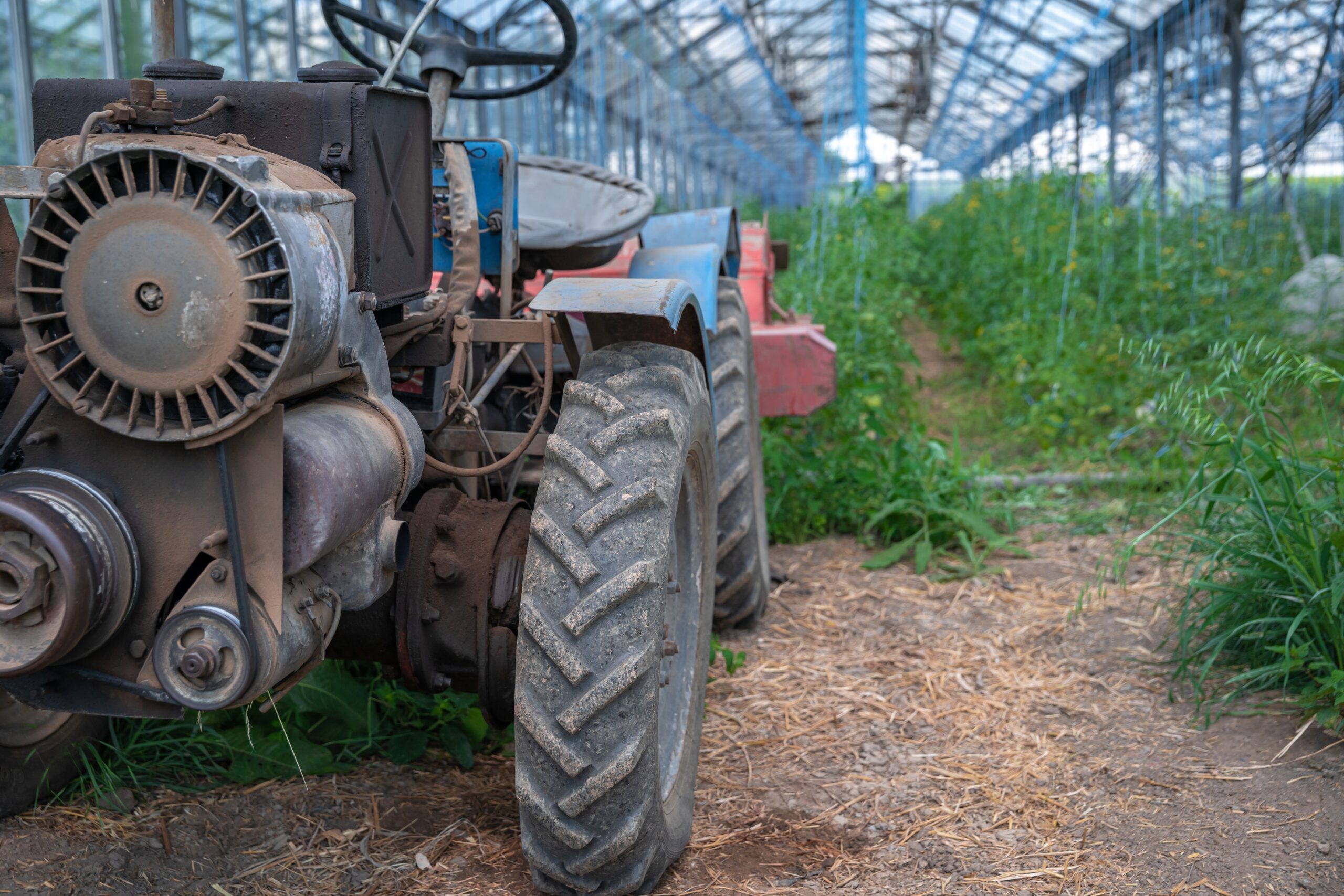

Most farms are degenerative by design. Not because farmers intend to destroy their land, but because the economic model demands extraction. Every year, you pull nutrients out through harvested crops. You till the soil, accelerating decomposition and erosion. You apply synthetic inputs to replace what’s lost. The trajectory is downward: less organic matter, worse soil structure, more inputs required, declining resilience.
This model worked when land was cheap, labor was abundant, and petroleum products cost nothing. It doesn’t work anymore. Input costs have tripled while commodity prices barely moved. Soil degradation has reached crisis levels on millions of acres. Climate volatility makes extraction-based farming increasingly risky.
The alternative isn’t going backwards to pre-industrial farming. It’s building regenerative systems: farms that improve soil health, increase biodiversity, cycle nutrients efficiently, and become more productive over time rather than less.
Regenerative agriculture isn’t a certification or a brand. It’s a design approach: build systems where farming improves the land instead of degrading it. Where the farm gets better with use, not worse.
Here’s how to actually build a regenerative farm—the principles, practices, economics, and timeline that make it work.
What “Regenerative” Actually Means
Strip away the marketing buzzwords and regenerative farming has a simple definition: farming practices that measurably improve soil health and ecosystem function over time.
Measurable improvements:
- Soil organic matter increasing year-over-year
- Soil biology diversity and activity increasing
- Water infiltration and retention improving
- Erosion decreasing or eliminated
- Biodiversity (plants, insects, microbes) increasing
- Farm productivity and profitability stable or improving
What it’s not:
- A return to pre-industrial farming methods
- Anti-technology or anti-mechanization
- Guaranteed to be organic (though often overlaps)
- One specific set of practices (varies by region and operation)
The test: If your farm is in better shape after 10 years of farming than it was when you started, you’re regenerating. If it’s worse, you’re degrading. Simple.
The Core Principles

Five principles drive regenerative systems. How you implement them varies by farm, climate, and goals—but the principles are universal.
1. Keep Soil Covered Year-Round
Why: Bare soil erodes, loses moisture, and degrades. Covered soil builds organic matter, supports biology, and protects structure.
How:
- Plant cover crops in off-seasons
- Use crop residues and mulches
- Reduce or eliminate fallow periods
- Integrate perennials that cover soil continuously
Economics:
- Cover crop seed: $20-$60/acre
- Benefit: $50-$150/acre in nitrogen, erosion control, weed suppression
- ROI: Positive in 1-2 years, compounds over time
2. Minimize Soil Disturbance
Why: Tillage destroys soil structure, kills biology, accelerates decomposition, and releases carbon. Reducing disturbance preserves these benefits.
How:
- Reduce tillage intensity and frequency
- Use no-till or strip-till where possible
- Terminate cover crops with rollers/crimpers instead of tillage
- Plant into residue with appropriate equipment
Economics:
- Equipment transition: $10,000-$100,000 depending on scale and existing equipment
- Fuel savings: $20-$40/acre annually
- Labor savings: 30-50% fewer field passes
- Soil health benefits: compound over 5-10 years
Reality check: No-till isn’t always possible or appropriate. But reducing tillage by 50% still delivers significant benefits.
3. Maximize Diversity
Why: Monocultures are biologically fragile and nutrient-inefficient. Diversity stabilizes systems, reduces pest pressure, and improves nutrient cycling.
How:
- Rotate crops (4+ species in rotation)
- Use multi-species cover crop mixes (5-10 species)
- Integrate livestock where feasible
- Add perennials and trees at field edges or in alleys
Economics:
- Planning complexity: Higher
- Input costs: Often lower (biological pest control, nitrogen fixation)
- Revenue diversification: Reduces market risk
- Total system productivity: 20-60% higher (measured by Land Equivalent Ratio)
4. Integrate Livestock
Why: Animals convert plant biomass to meat/dairy/fiber while returning nutrients to soil. They graze cover crops, add manure, stimulate plant growth, and generate additional revenue.
How:
- Rotational grazing of cover crops
- Mob grazing to concentrated nutrients and disturb soil surface
- Poultry following cattle to break up manure and control pests
- Livestock on crop residues post-harvest
Economics:
- Infrastructure: $2,000-$20,000 (fencing, water systems, handling facilities)
- Revenue: $100-$500/acre from livestock (depending on species and intensity)
- Fertility value: $50-$150/acre in replaced synthetic fertilizer
- ROI: 2-5 years depending on scale
Reality check: Livestock add management complexity. Not every farm should integrate animals—but where appropriate, the benefits are substantial.
5. Keep Living Roots in Soil
Why: Living roots exude sugars that feed soil microbes. Active root systems mine nutrients, create soil structure, and maintain biological activity year-round.
How:
- Extend growing season with succession planting
- Use cover crops immediately after harvest
- Integrate perennials that maintain roots year-round
- Avoid leaving soil unplanted for extended periods
Economics:
- Additional seed costs: $15-$40/acre for extended cover cropping
- Benefit: Continuous biological activity, nutrient cycling, structure building
- Long-term impact: Faster soil health improvement
The Implementation Roadmap
You don’t convert to regenerative overnight. Here’s a realistic 10-year path:
Year 1-2: Foundation Building
Focus: Learn, test, establish baseline
- Soil test comprehensively (biology, nutrients, structure)
- Start cover crops on 20-30% of acres
- Reduce tillage where feasible
- Document current practices and costs
- Connect with regenerative farmers in your region
Economics:
- Costs: Similar to conventional (learning curve offsets input reductions)
- Revenue: Stable (no major changes yet)
- Soil health: Starting to improve on cover-cropped acres
Goal: Prove to yourself that these practices work on your land.
Year 3-5: Expansion and Transition
Focus: Scale what’s working, diversify systems
- Expand cover crops to 80%+ of acres
- Implement diverse rotations (4+ crops)
- Add livestock integration if appropriate
- Significantly reduce tillage (50-75% reduction)
- Build soil biology through compost or compost tea
Economics:
- Costs: Declining 20-30% (reduced tillage, fertilizer, pesticides)
- Revenue: Stable or slightly lower (learning curve, yield dips during transition)
- Soil health: Measurable improvement (organic matter up 0.1-0.3% annually)
Goal: Establish regenerative practices across the majority of the operation.
Year 6-10: Optimization and Maturation
Focus: Refine systems, maximize benefits
- Fine-tune species mixes and rotations based on results
- Optimize grazing and crop integration
- Reduce inputs further as biology takes over functions
- Explore premium markets (organic, regenerative certified)
- Measure and market soil health improvements
Economics:
- Costs: 40-60% below conventional baseline
- Revenue: Stable to improving (yields recover/exceed, premium markets)
- Profit margins: 50-100%+ higher than conventional neighbors
- Soil health: Dramatically improved (OM up 1-2%+, biology thriving)
Goal: Mature regenerative system with compounding benefits and strong profitability.
Year 10+: Continuous Improvement
Focus: Maintain and enhance systems
- Soil continues improving (compounding benefits)
- Fine-tuning based on climate and market changes
- Experimenting with new crops or techniques
- Potential for carbon markets and ecosystem service payments
Economics:
- Lowest cost structure in your region
- Highest resilience to weather and market volatility
- Most valuable land (documented soil improvement increases property value)
- Financial stability and flexibility
The Practices That Actually Work
Beyond principles, here are specific practices proven to regenerate farmland:
Cover crop mixes (not monoculture covers):
- 5-10 species including: grasses, legumes, brassicas, broadleaves
- Functional diversity: nitrogen fixers, deep-rooted, fast-growing, slow-decomposing
- Example: Oats + hairy vetch + radish + clover + turnip
- Benefit: More complete nutrient cycling, pest disruption, soil structure building
Mob grazing (ultra-high-density, short-duration):
- 50,000-100,000+ lbs liveweight per acre for 12-24 hours
- Concentrated trampling stimulates regrowth and carbon incorporation
- Long rest periods (60-120 days) between grazing events
- Mimics wild herbivore herd impacts
Compost and compost tea:
- High-quality compost adds diversity of microbes and organic matter
- Compost tea (liquid extract) innoculates soil biology rapidly
- Application rates: 1-5 tons compost/acre, or compost tea foliar/soil drench
- Accelerates biological establishment in degraded soils
Perennial integration:
- Hedgerows, windbreaks, alley cropping with trees
- Permanent root systems maintain soil structure
- Additional revenue streams (fruit, nuts, timber, habitat)
- Long-term carbon sequestration
Reduced or no-till systems:
- Minimize disturbance to preserve fungal networks and structure
- Plant directly into residue or use strip-till
- Terminate covers mechanically (roller-crimper) not chemically
Diverse rotations (4-7+ crops):
- Different nutrient demands and root structures
- Pest and disease disruption
- Risk spreading across multiple commodities
- Example: Corn → beans → small grains → cover crop → vegetable → pasture
The Economics: What It Actually Costs and Returns
Transition costs (Year 1-3):
- Cover crop seed: +$25-$50/acre
- Equipment modifications: $10,000-$50,000 (one-time)
- Learning curve: Yield dips of 10-15% possible
- Consulting/education: $2,000-$10,000
Total transition cost: $50,000-$100,000 for a 500-acre operation over 3 years
Offset by:
- NRCS cost-share: 50-75% of many practices
- Reduced inputs: $30-$80/acre annually
- Carbon programs: $10-$30/acre/year (emerging markets)
Mature system economics (Year 5+):
Conventional corn/soy (500 acres):
- Revenue: $450,000 ($900/acre)
- Input costs: $225,000 ($450/acre)
- Net: $225,000 ($450/acre)
Regenerative diverse rotation (500 acres):
- Revenue: $475,000 ($950/acre—slight yield increase, diverse products)
- Input costs: $90,000 ($180/acre—dramatically reduced)
- Net: $385,000 ($770/acre)
Difference: $160,000/year higher profit
Plus:
- Better drought/flood resilience (yield stability)
- Lower financial risk (diversified revenue)
- Increasing land value (documented soil improvement)
- Potential premium markets and carbon payments
ROI on transition: 2-4 years. Then compounding benefits indefinitely.
The Measurement: How to Know It’s Working
Regenerative farming requires measurement, not just intention.
Annual soil testing:
- Organic matter percentage (goal: +0.1-0.3%/year)
- Aggregate stability (measure soil structure)
- Infiltration rate (goal: improving)
- Biological indicators (earthworms, respiration tests)
Operational metrics:
- Input costs per acre (goal: declining)
- Yield stability (goal: less volatile year-to-year)
- Profit margin per acre (goal: increasing)
Ecological indicators:
- Biodiversity surveys (insects, birds, plants)
- Water quality (reduced runoff pollution)
- Wildlife habitat quality
Document everything: Photos, soil tests, yields, costs, observations. You’re building proof of regeneration—for yourself, for lenders, for buyers, for future operators.
Common Mistakes and How to Avoid Them
Mistake 1: Going too fast Converting the whole farm year one. Yields crash during transition, cash flow craters, you panic and revert to conventional.
Fix: Transition 10-30% of acres per year. Prove practices work, then expand.
Mistake 2: Skipping the learning Assuming you can wing it. Regenerative farming requires new skills—cover crop species selection, grazing management, reduced-till planting.
Fix: Invest in education (workshops, consultants, mentors). Start small and learn.
Mistake 3: Not having adequate reserves Transition can reduce yields 10-15% for 1-3 years. If you’re cash-strapped, this breaks you.
Fix: Build 1-2 years operating capital before transitioning, or transition very gradually.
Mistake 4: Expecting instant results Soil health takes 3-5 years to show dramatic improvement. Expecting year-one miracles leads to disappointment.
Fix: Commit to a 5-10 year timeline. Trust the process.
Mistake 5: Ignoring economics Getting so focused on soil health you forget profitability. Regenerative farming must be profitable to be sustainable.
Fix: Track costs rigorously. Make decisions based on ROI, not ideology.
The Support Systems You Need
Technical support:
- NRCS (free soil health planning and cost-share)
- Regional regenerative ag networks and farmer groups
- Consultants specializing in your region/crops
Financial support:
- NRCS EQIP and CSP programs (cost-share and payments)
- FSA loans for beginning/transitioning farmers
- Carbon programs (Nori, Indigo, Land to Market)
- Regenerative agriculture lenders (Iroquois Valley, Whole Foods Market loans)
Market support:
- Direct marketing (farmers markets, CSAs, local wholesale)
- Regenerative certifications (ROC, Land to Market, Real Organic)
- Food hubs and aggregators prioritizing regenerative products
Knowledge support:
- Rodale Institute, Regeneration International, Savory Institute
- Regional soil health coalitions
- University extension programs focused on soil health
- Books: “The Carbon Farming Solution,” “Dirt to Soil,” “Growing a Revolution”
The Bottom Line
Building a regenerative farm isn’t about returning to the past or rejecting modernity. It’s about designing systems where farming improves the land rather than degrading it.
The principles are clear:
- Keep soil covered
- Minimize disturbance
- Maximize diversity
- Integrate livestock
- Maintain living roots
The economics work:
- Lower input costs (40-60% reduction)
- Stable or higher yields over time
- Better risk management and resilience
- Higher long-term profitability
The timeline is realistic:
- Years 1-3: Transition and learning
- Years 4-7: Establishment and optimization
- Year 8+: Mature system with compounding benefits
The measurement is objective:
- Soil organic matter increasing
- Inputs declining
- Profitability improving
- Land regenerating
This isn’t idealism—it’s applied ecology that happens to improve farm economics. The farms that survive and thrive in the next 30 years will be the ones that build soil, not mine it.
Start small. Measure results. Scale what works. Build a farm that gets better with time, not worse.
Because the alternative—extractive farming—has a built-in expiration date. And that date is approaching fast.